
Bio-Standards Biocompatibility Evaluation Solution is designed to guide medical device manufacturers through the essential process of demonstrating biocompatibility, ensuring adherence to stringent regulatory standards. Our approach includes a series of tailored steps to comprehensively address biological safety assessments:
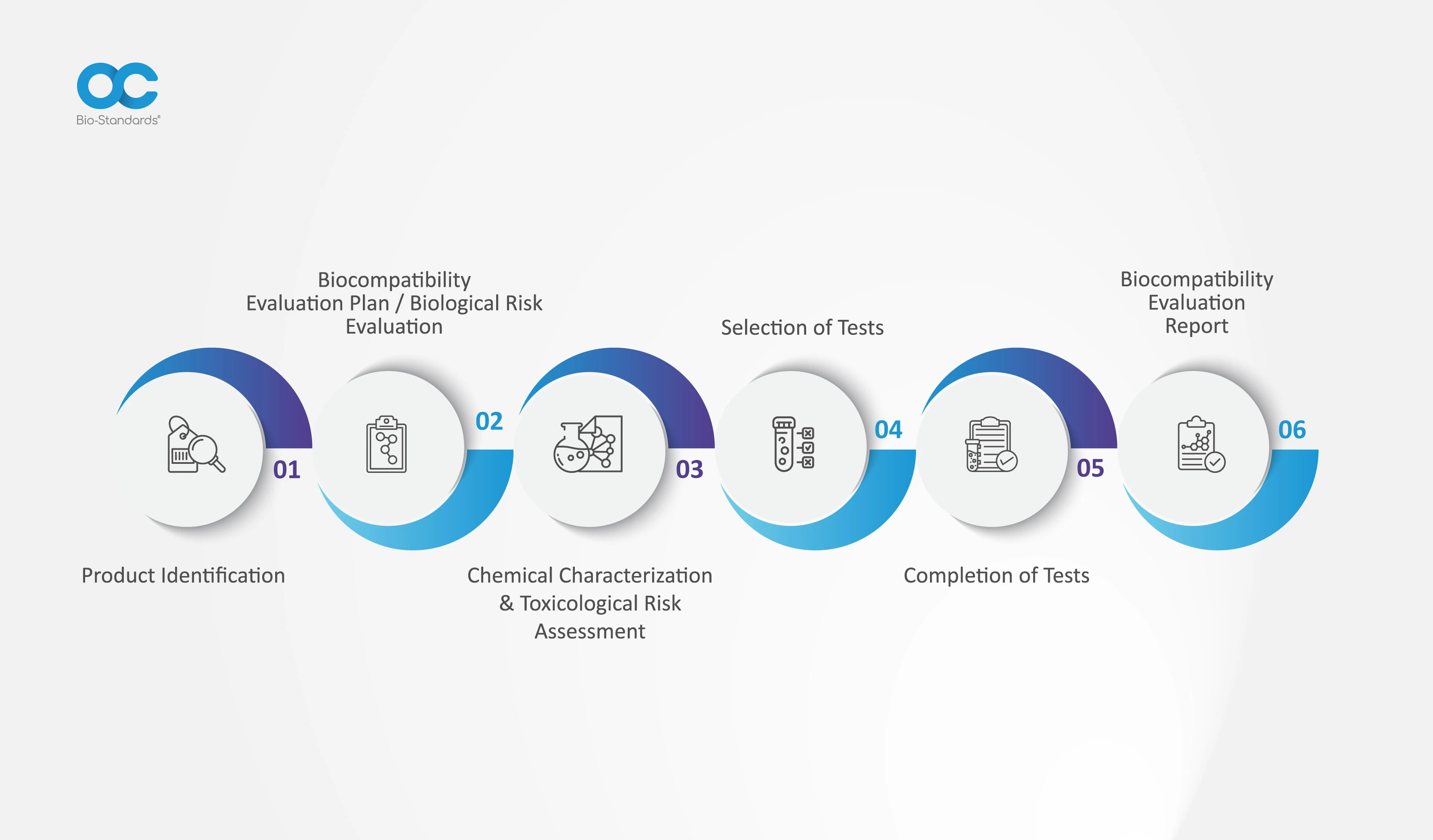
Initial Product Identification Meeting: This vital first step involves in-depth consultation with manufacturers and our biocompatibility experts to understand the product's characteristics, intended use, and interactions with the human body. This discussion helps define the scope of necessary biocompatibility assessments.
Comprehensive Biological Risk Assessment: We perform a thorough biological risk assessment to identify potential hazards associated with the product's materials and intended use. This assessment forms the foundation for a focused biocompatibility evaluation strategy.
Biocompatibility Evaluation Plan Preparation: Utilizing insights from the risk assessment, we create a Biocompatibility Evaluation Plan that outlines the specific tests and evaluations needed to assess biocompatibility, considering the nature and duration of body contact.
Guidance on Test Facility Selection: Following the establishment of the Evaluation Plan, our experts assist in selecting the appropriate testing facilities, ensuring all tests meet regulatory standards and industry best practices.
Biocompatibility Evaluation Report Compilation: Once testing is complete, we prepare the Biocompatibility Evaluation Report, consolidating test results and providing a detailed analysis of the product’s biocompatibility and compliance with applicable regulations.
Comprehensive Support Offered
Our solution includes extensive support throughout the process:
Biocompatibility evaluation assesses how a medical device interacts with the body, confirming that its materials, and any degradation or leachable products, do not present an unacceptable biological risk for the device’s intended use and contact duration.
ISO 10993 is the international series of standards for the biological evaluation of medical devices. Its first part, ISO 10993-1, sets the framework: biological safety is assessed within a risk management process rather than as a fixed checklist of tests. The evaluation considers the materials used, how the device is manufactured, and how it contacts the body.
This matters commercially because it means testing is not automatic. A properly structured evaluation identifies which endpoints genuinely need laboratory data and which can be addressed with existing information, which is why the risk assessment comes before any test is commissioned.
The scope of a biological evaluation is driven by two factors:
Together these determine which biological endpoints apply. A short-contact surface device and a long-term implant sit at opposite ends of the same framework, and the documentation expected reflects that difference.
Depending on categorisation, an evaluation may need to address endpoints such as cytotoxicity, sensitization, and irritation or intracutaneous reactivity, with additional endpoints considered for devices with greater or longer contact. The evaluation plan sets out which apply to your device and why the others do not, which is as important to the reviewer as the results themselves.
Material and chemical information can often answer biological safety questions without new animal testing. Chemical characterisation identifies what the device is made of and what could migrate from it, and a toxicological risk assessment then evaluates whether identified substances present a risk at the exposure levels involved. Where this evidence is sufficient, it can reduce the testing burden and shorten the documentation route.
For a Saudi submission the deliverable is not the test report alone but a coherent argument linking the plan, the risk assessment, and the data. This sits alongside risk management documentation in the technical file submitted for Medical Device Marketing Authorization (MDMA).
At Bio-Standards, we are committed to assisting medical device manufacturers through the complexities of biocompatibility assessments, from initial evaluations to final reporting. Our objective is to evaluate your product against the applicable biological safety and regulatory requirements and to document that evaluation clearly, supporting your route to market while keeping patient safety first. Contact us to discover how our Biocompatibility Documentation Solution can support your compliance journey.
Biocompatibility evaluation is one component of the complete technical file we prepare for SFDA submissions.


.svg)
